
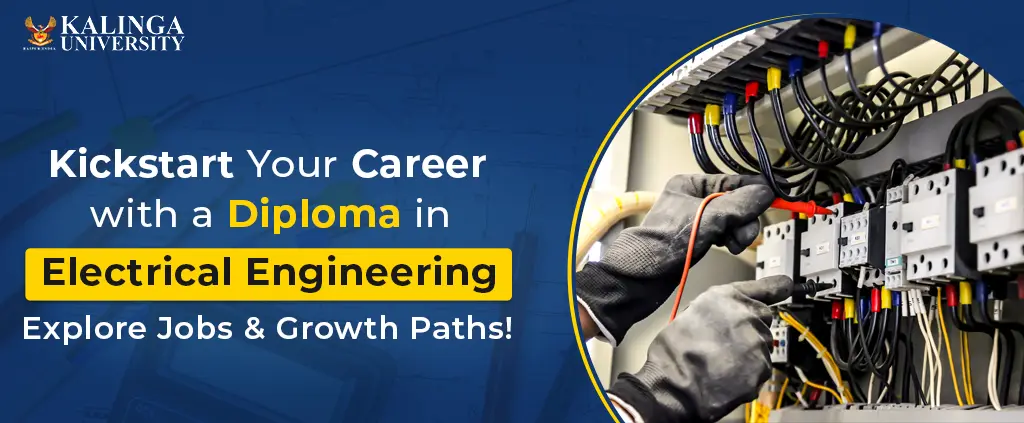
After a Polytechnic Diploma in Electrical Engineering, diploma holders have an outstanding foundation knowledge about the subject, technical skills, and hands-on experience in the chosen field. As a result, they have mastered the tools, equipment, and software associated with the branch of Electrical Engineering to start their rewarding career. There are diverse choices in front of the candidates to start their career after a polytechnic diploma. If they want to learn the advanced skills to engage in emerging technologies, they need to have knowledge of advanced technology to offer better solutions to the existing problems. For that, they can enroll for the B.Tech Electrical Engineering (Lateral Entry) to earn a graduation degree. Here is an in-depth look at your potential career paths, growth avenues, and steps to maximize your potential in 2025 and beyond.
Why Choose a Career in Electrical Engineering After Polytechnic?
A diploma program provides students with the necessary practical knowledge of electrical devices, power systems, circuit theory, automation, and industrial electronics in a three-year curriculum. The 3-year program is designed to be a hands-on experience, which ensures that diploma holders are ready for professional roles immediately after completing the program. Most Indian polytechnic colleges combine classroom learning with industrial training, preparing them for industry-ready work from day one, so they learn how to tackle the actual challenges.
Core Technical Roles for Electrical Engineers After Polytechnic
The reason behind choosing the polytechnic diploma is that the program is designed to work on the skills of applicants so they can start their career and support their families. List of the opportunities offered to the applicants:
Electrical Technician
One of the most followed paths is that of electrical technicians who are responsible for installing, maintaining, and repairing electrical systems in domestic, commercial, or industrial settings. The role of Electrical Technicians is to resolve issues for the smoother functioning of the devices and power sources.
Maintenance Electrician
A Maintenance Electrician ensures that electrical systems in factories and plants run smoothly, so their duties involve inspections and upgrades regularly. The requirement of a skilled Maintenance Electrician is in the automation and mass production industries.
Substation Technician
Substation Technicians are responsible for the smooth functioning of high-voltage equipment in power plants or substations. In simple words, these professionals are engaged in safe operations of electrical power systems and the distribution network with their technical skills.
Power Plant Operator
A Power Plant Operator is responsible for operating and monitoring generators, transformers, and grid operations. At present, operators are not only engaged in traditional power generation but also in renewable energy, which is used to generate energy.
Electrical Design Drafter
The Electrical Design Drafter is in charge of technical drawings and schematic diagrams, so the skills required for this job profile are electrical knowledge and designing, which requires software proficiency like AutoCAD.
Control System Technician
These experts engage with automation systems, especially their control systems, like in sectors such as manufacturing, FMCG, and power, to operate smoothly. A Control System Technician works efficiently and safely in operations associated with programmable logic controllers (PLCs), human-machine interfaces (HMIs), and related technologies.
Sector-Wise Opportunities Available for Electrical Engineering Diploma Holders
Different sectors require electrical engineers to regulate electricity, install telecom networks, and automate.
- Manufacturing & Production:
The manufacturing sector is heavily relying on electrical engineering. Industries like automobile plants, electronics manufacturing units, and consumer appliances companies regularly recruit diploma electrical engineers for installations, testing, and supervision of electrical systems. - Construction & Infrastructure:
In the construction and infrastructure sectors, electrical engineers are required for site electrification, smart infrastructure, and project implementation for buildings, commercial complexes, and public utilities. - Energy & Power Sector:
State electricity boards, NTPC, BHEL, Tata Power, and renewable energy companies frequently hire diploma holders for various technical and operational roles to maintain the proper supply of power and energy. - Telecommunications & Automation:
Engineers who are engaged in the Telecommunication and Automation sectors have to be capable of handling the installation and maintenance of communication towers and automation equipment for telecom networks. - Service & Maintenance Industries:
Electrical Engineers are equally necessary for the service industries like hospitals, railways, shopping malls, and IT parks hire diploma holders for maintenance and electrical safety.
Public Sector and Government Opportunities
Many government organizations and PSUs, such as DRDO, Indian Railways, BEL, and regional electricity boards, hire electrical diploma holders. Electrical Engineers, after a polytechnic diploma, can apply for government jobs that offer stability, attractive perks. After gaining experience, they can apply for the departmental exams whenever there is a vacancy to improve their career prospects.
Private Sector Careers
New opportunities are available in the electrical engineering field. After the introduction of new policies by the government, like pushing smart cities, green energies, and sustainable development, are encouraging electrical engineers to be innovative and research-oriented, and investors in the private sector are promoting engineers with skills for smoother operations.
Entrepreneurship
Diploma holders with technical knowledge can start their own ventures in electrical contracting, maintenance services, or by offering consultancy services or partnering with other professionals based on their interests.
Abroad Opportunities
After a few years’ experience and with relevant upskilling, many diploma holders explore jobs in the Middle East, Africa, Southeast Asia, and other developing regions where infrastructure projects require electrical technicians. There are good salary prospects and career growth for those willing to work overseas.
Higher Studies
Those who want to pursue higher education after a diploma in electrical engineering can apply for the B.Tech program via lateral entry. An engineering degree will enhance the job prospects related to research and managerial roles.
Why apply for the B.Tech Lateral Entry program from Kalinga University?
For higher studies, learners can apply for the B.Tech Lateral Entry from Kalinga University if they want to work on their skill development for career growth. The program is designed according to the requirements of industries so that they can easily achieve the goals of learners. The program focuses on enhancing the understanding of learners so they can easily troubleshoot and diagnose problems.
B.Tech Electrical Engineering Lateral Entry Program
Kalinga University’s B.Tech Electrical Engineering (Lateral Entry) program is a hybrid program meant for working professionals who prefer to balance their job and higher studies. The duration of the program is 3 years. The reason behind promoting learning directly to the second year is that they have already completed the foundational knowledge about the program. Not just the elementary knowledge, but also having work experience in the related field.
Highlights of the Kalinga University B.Tech Electrical Engineering (Lateral Entry) program
- The duration of the B.Tech for Working Professionals program is 3 years.
- The advantages of enrolling in B.Tech for Working Professionals are that it is offered in a hybrid mode.
- Online sessions are no less compared than traditional classroom sessions as learners can engage one-on-one with their professors.
- The program helps diploma holders upgrade from technician-level jobs to engineer-level roles with better salary prospects.
- The program is approved by UGC & AICTE, ensuring credibility for jobs, higher studies, and government exams.
- B.Tech Lateral Entry curriculum blends theoretical knowledge with hands-on experience, making learners job-ready.
Eligibility of B.Tech Electrical Engineering (Lateral Entry)
Applicants who are looking to enroll for the B.Tech Electrical Engineering via the lateral Entry program from Kalinga University can enroll for the program, but they need to meet the guidelines mentioned below:
- Polytechnic Diploma holders and B.Sc. degree holders, if they have studied Mathematics from an approved institute/ university, can enroll for the program.
- They must have one year of work experience in the field, but there is no age limit to enroll for the program.
- Kalinga University doesn’t conduct the entrance exam for the B.Tech program via lateral entry.
What is the B.Tech Lateral Entry Fee of Kalinga University
Kalinga University provides scholarships and flexible no-EMI payment options for candidates seeking admission to its programs. Below are the detailed fee structures offered by the university:
|
Kalinga University B.Tech Lateral Entry Fees |
|
|
Per Semester Fees |
INR 50,000 |
|
Exam Fees |
INR 1,500 |
|
Registration Fees |
INR1,400 |
Job Opportunities and Salary Offered After B.Tech Electrical Engineering
Diploma holders in electrical engineering can earn between INR 3 lakhs to INR 4.5 lakhs. There are different factors that are considered before offering a package to the right candidates, like location, sector, and the skills of an individual.
|
Job Role |
Annual Package (INR) |
|
Electrical Engineer |
3.5-4.5 Lakhs |
|
Power Engineer |
4-5 Lakhs |
|
Design Engineer |
3-4 Lakhs |
|
Control and Instrumentation Engineer |
4-5 Lakhs |
|
Electronics Engineer |
3.5-4.5 Lakhs |
|
Telcom Engineer |
3.5-4.5 Lakhs |
Conclusion
A Polytechnic Diploma in Electrical Engineering is a gateway to a world of opportunity. Not only does it offer jobs in traditional power, manufacturing, and infrastructure sectors, but it also opens doors to modern, future-oriented industries like automation, renewable energy, and IoT. With technology rapidly evolving, lifelong learning and readiness to adapt are crucial. Diploma holders who want to upskill can apply for higher job roles or even advance to degree programs via a lateral entry program.